Dal
Dal, also dhal, is Hindi and Urdu for split pulses and the dish made from them.1,2,3,4,5 Common kinds are toor, moong, masoor, chana and urad dal.6,7,8,9,10,11
Also known as Daal, Dhal, Lentil dal
Dal is the Hindi and Urdu word for split pulses such as lentils, peas and beans; it goes back to a Sanskrit word meaning to split.2,3,4,5,12 Dal also names the dish made from them: pulses simmered, usually puréed and spiced, and the Oxford Companion to Food counts at least 60 kinds.1,2,3,5,13,14 Common kinds are toor dal from pigeon peas, moong dal from mung beans, masoor dal from red lentils, chana dal from chickpeas and urad dal from black gram.6,7,8,9,10,11 Dal is one of the principal foods of the Indian subcontinent and a staple in India, especially in vegetarian households.2,14,15,16 In northern India, dal is typically eaten with flatbread such as chapati.4,14,17 In Hindi, dal with rice is dāl-bhāt and dal with bread dāl-roṭī, a phrase that even stands for food and livelihood.4,5,18
Is dal the same as lentils?
Not only: dal means split pulses of many kinds, such as lentils, peas and beans. Masoor dal is split red lentils, toor dal split pigeon peas and chana dal split chickpeas.2,3,4,6,7,9,10
Is dal the same as curry?
Dal is a dish of pulses that are simmered, usually puréed and spiced. Curry is the broader word for a dish or sauce seasoned with a mixture of pungent spices, often meat or vegetables in a spicy sauce.3,19,20
Recipes with Dal
Related products in our shop
 TRSTRS Split Pigeon Peas (Toor Dal)€3.99 · 500 g · €7.98 per kg
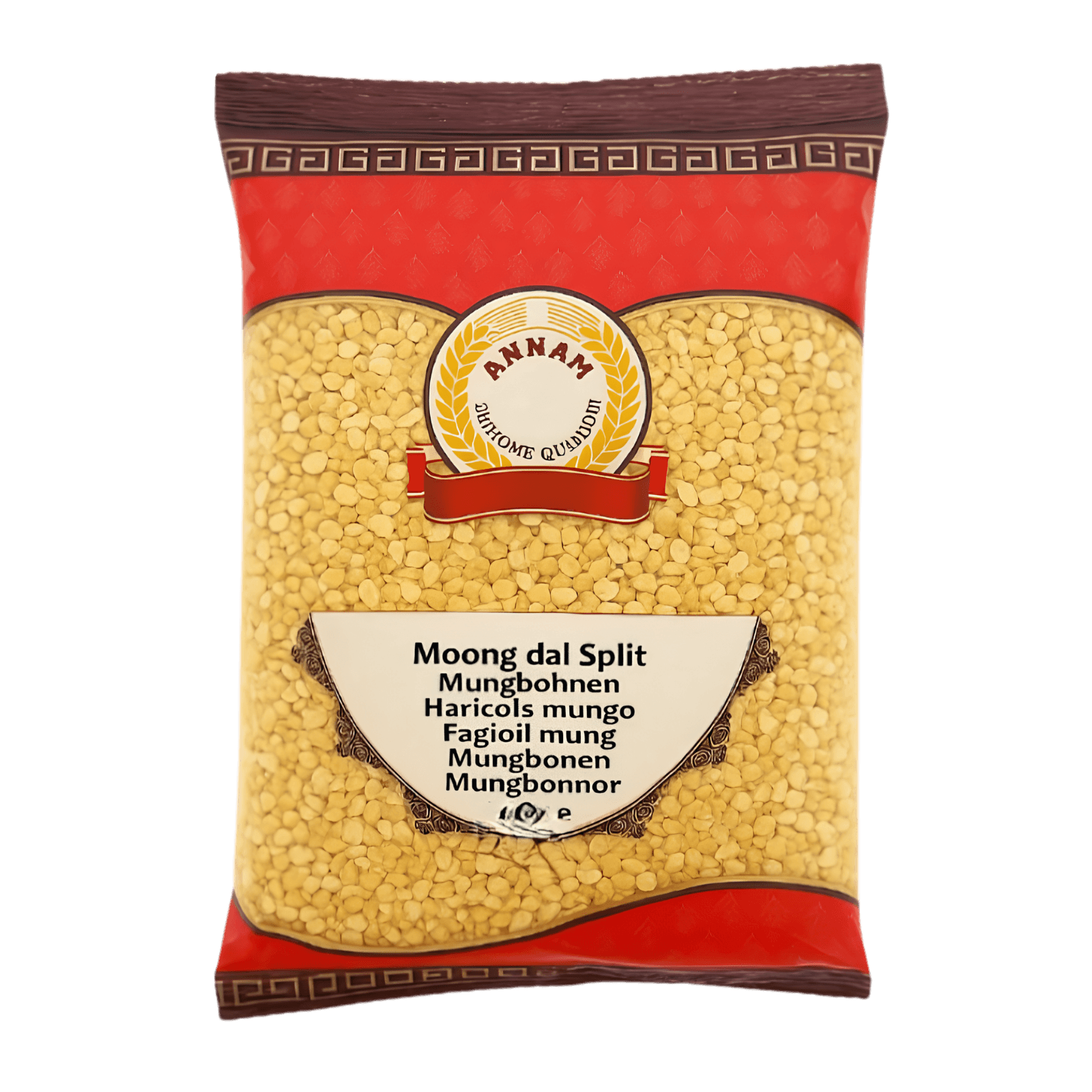 AnnamAnnam Split Yellow Mung Beans (Moong Dal)€2.99 · 500 g · €5.98 per kg
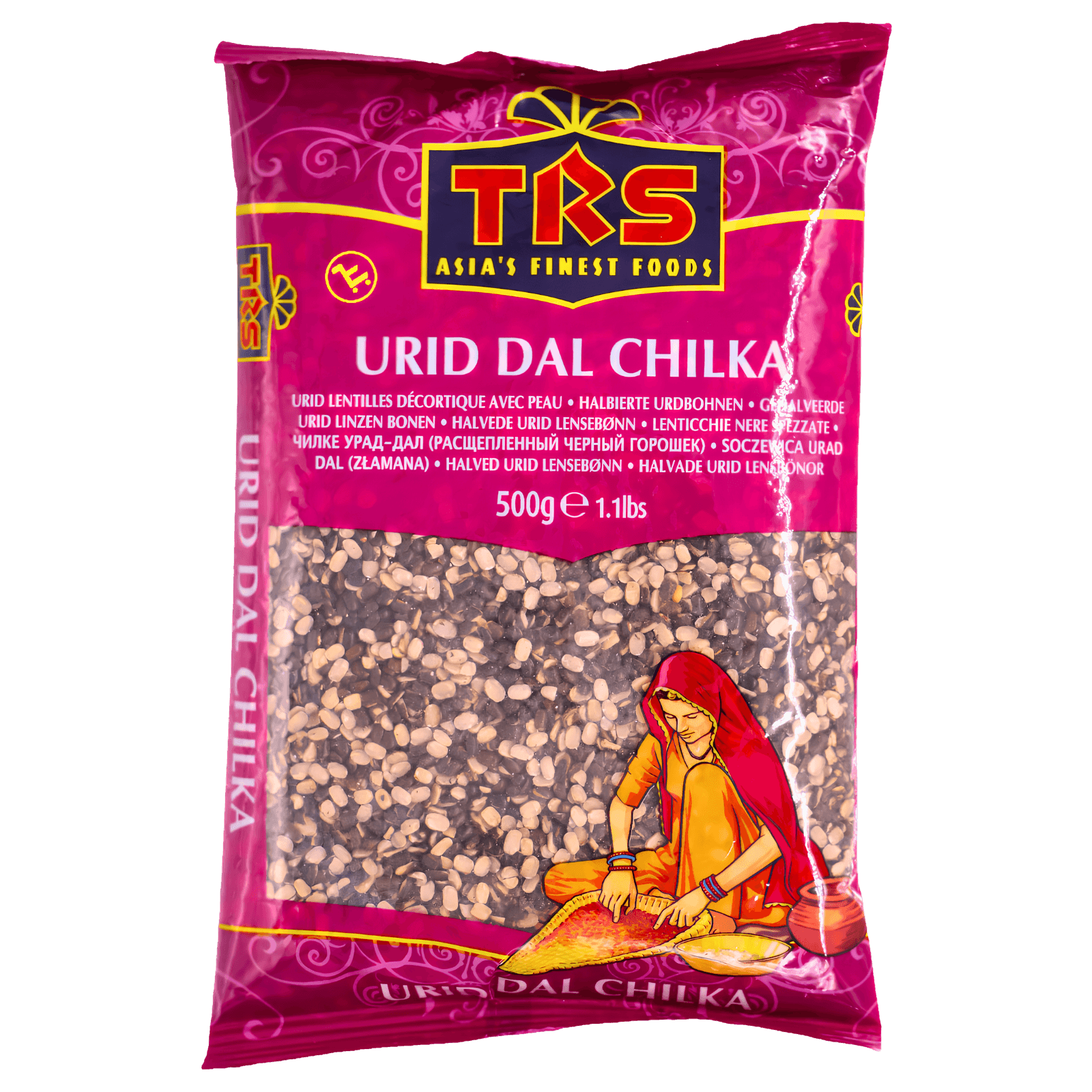 TRSTRS Split Urad Beans with Skin (Urid Dal Chilka)€2.99 · 500 g · €5.98 per kg
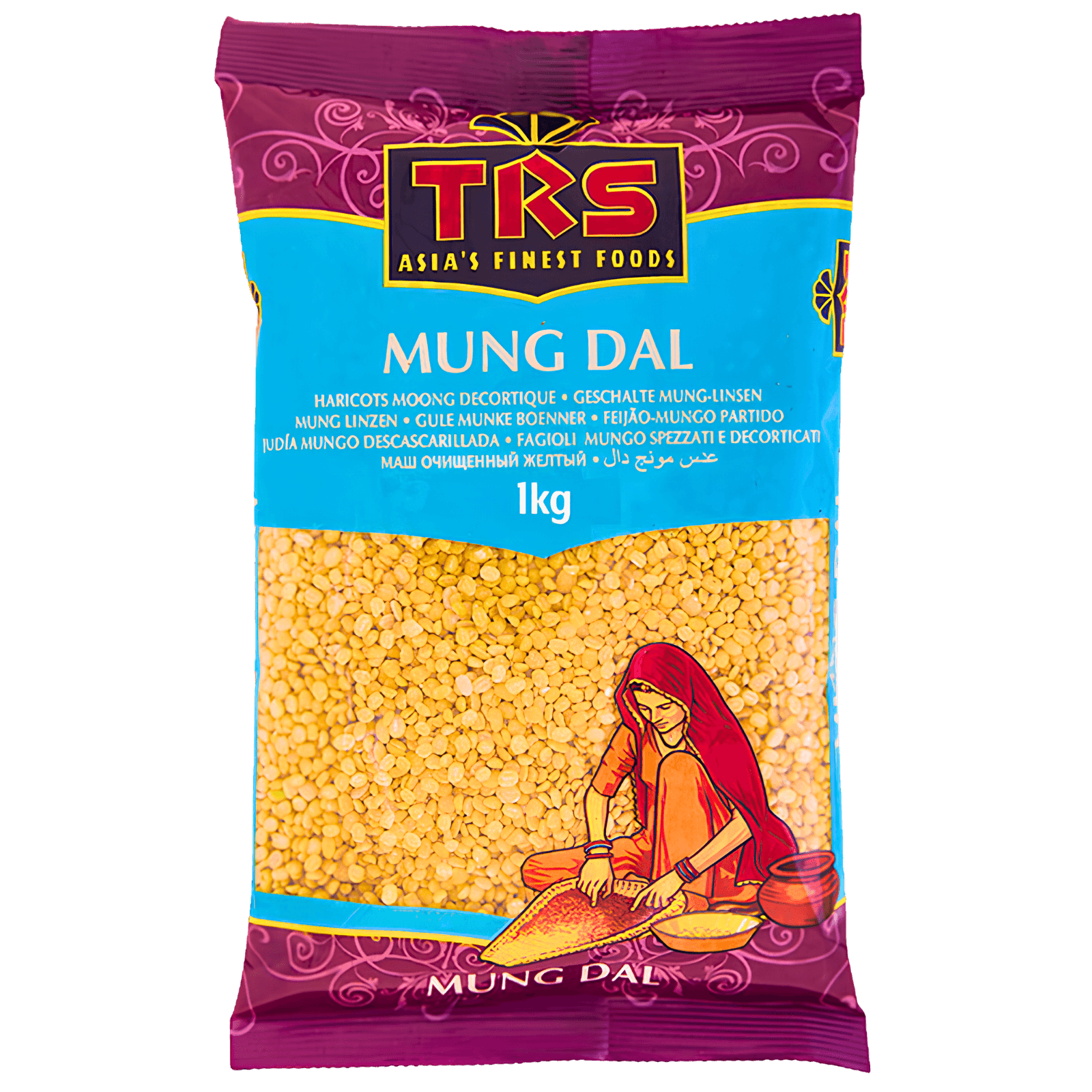 TRSTRS Split Yellow Mung Beans (Moong Dal)€2.99 · 500 g · €5.98 per kg
 TRSTRS Red Split Lentils (Masoor Dal)€2.99 · 500 g · €5.98 per kg
 TRSTRS Split Chickpeas (Chana Dal)€2.99 · 500 g · €5.98 per kg
All prices incl. VAT, plus €4.90 shipping, free for orders from €49.00.
Sources
- Oxford University Press. (n.d.). dal. In Oxford Advanced Learner's Dictionary. Retrieved October 6, 2026.
- Davidson, A. (2014). dal. In The Oxford Companion to Food. Oxford University Press.
- Merriam-Webster. (n.d.). dal. In Merriam-Webster.com Dictionary. Retrieved October 6, 2026.
- Platts, J. T. (1884). dāl. In A Dictionary of Urdu, Classical Hindi, and English (p. 502). Digital Dictionaries of South Asia, University of Chicago.
- Digital Dictionaries of South Asia, University of Chicago. (n.d.). dāl. In The Oxford Hindi-English Dictionary (p. 493). Retrieved October 6, 2026.
- Food Safety and Standards Authority of India. (2025). Chapter 2: Food Product Standards, 2.4 Cereals and Cereal Products.
- Indian Culture: TRS Split Pigeon Peas (Toor Dal): ingredients on the pack.
- Indian Culture: TRS Split Yellow Mung Beans (Moong Dal): ingredients on the pack.
- Indian Culture: TRS Red Split Lentils (Masoor Dal): ingredients on the pack.
- Indian Culture: TRS Split Chickpeas (Chana Dal): ingredients on the pack.
- Indian Culture: TRS Split White Urad Beans (Urid Dal): ingredients on the pack.
- (n.d.). dal. In Online Etymology Dictionary. Retrieved October 6, 2026.
- Cambridge University Press. (n.d.). dal. In Cambridge Dictionary. Retrieved October 6, 2026.
- Pai Raikar, S. (2026). Indian cuisine. In Encyclopaedia Britannica.
- Antani, V. & Mahapatra, S. (2022). Evolution of Indian cuisine: a socio-historical review. Journal of Ethnic Foods, 9, 15. DOI: 10.1186/s42779-022-00129-4
- Katzer, G. (2003). Asant (Ferula assa-foetida, Asafoetida, Hing). Gernot Katzers Gewürzseiten.
- Mehra, N. M. (2016). North Indian Dining: Three Things You Need to Know to Sound like a Pro. MICHELIN Guide. Michelin.
- Platts, J. T. (1884). bhāt. In A Dictionary of Urdu, Classical Hindi, and English (p. 177). Digital Dictionaries of South Asia, University of Chicago.
- Merriam-Webster. (n.d.). curry. In Merriam-Webster.com Dictionary. Retrieved October 6, 2026.
- Cambridge University Press. (n.d.). curry. In Cambridge Dictionary. Retrieved October 6, 2026.
Cite this entry
MLA
“Dal.” Indian Culture Glossary, Indian Culture, https://www.indian-culture.de/en/glossar/dal.
Chicago
Indian Culture Glossary, s.v. “Dal,” https://www.indian-culture.de/en/glossar/dal.
APA
Indian Culture. (n.d.). Dal. In Indian Culture glossary. https://www.indian-culture.de/en/glossar/dal