
Basmati
Basmati heißt auf Hindi duftend: ein Langkornreis aus Indien und Pakistan vom Fuß des Himalaya.1,2,3,4,5,6 Gekocht werden weiße Körner mindestens 1,7-mal so lang.5,7
Auch bekannt als Basmati-Reis
Basmati ist ein duftender Langkornreis aus der Indus-Ganges-Ebene am Fuß des Himalaya, beiderseits der Grenze zwischen Indien und Pakistan.4,5,6,7 Das Wort kommt vom Hindi bās, Duft; bāsmatī heißt duftend.1,2,3,4 Nach der indischen Lebensmittelnorm sind die rohen Körner im Schnitt mindestens 6,61 Millimeter lang, gekocht mindestens 12 Millimeter, und Basmati muss von Natur aus duften, roh wie gekocht.7 Den Duft gibt vor allem der Stoff 2-Acetyl-1-pyrrolin, der auch Jasminreis duften lässt.8,9 Gekocht bleiben die Körner locker und getrennt; darum nimmt man Basmati für Biryani und Pulao.10,11,12 Laut Packung kommt der Basmati im Sortiment meist aus Indien, der Punjabi Basmati-Reis 1121 aus Pakistan; Heer und Punjabi gibt es auch vorgedämpft als Golden Sella.7,13,14,15,16,17,18,19
Was ist der Unterschied zwischen Basmati und normalem Reis?
Basmati duftet von Natur aus und hat besonders lange, schlanke Körner: roh im Schnitt mindestens 6,61 Millimeter, und weißer Basmati wird beim Kochen mindestens 1,7-mal so lang. Er stammt nur aus anerkannten Sorten aus Indien und Pakistan.4,5,6,7,20
Was ist besser, Basmatireis oder Jasminreis?
Das hängt vom Gericht ab: Basmati bleibt gekocht locker und körnig, gut für Biryani und Pulao. Jasminreis aus Thailand enthält weniger Amylose, eine Stärke, und wird beim Kochen weicher.5,7,10,11,21,22
Rezepte mit Basmati
Verwandte Produkte in unserem Shop
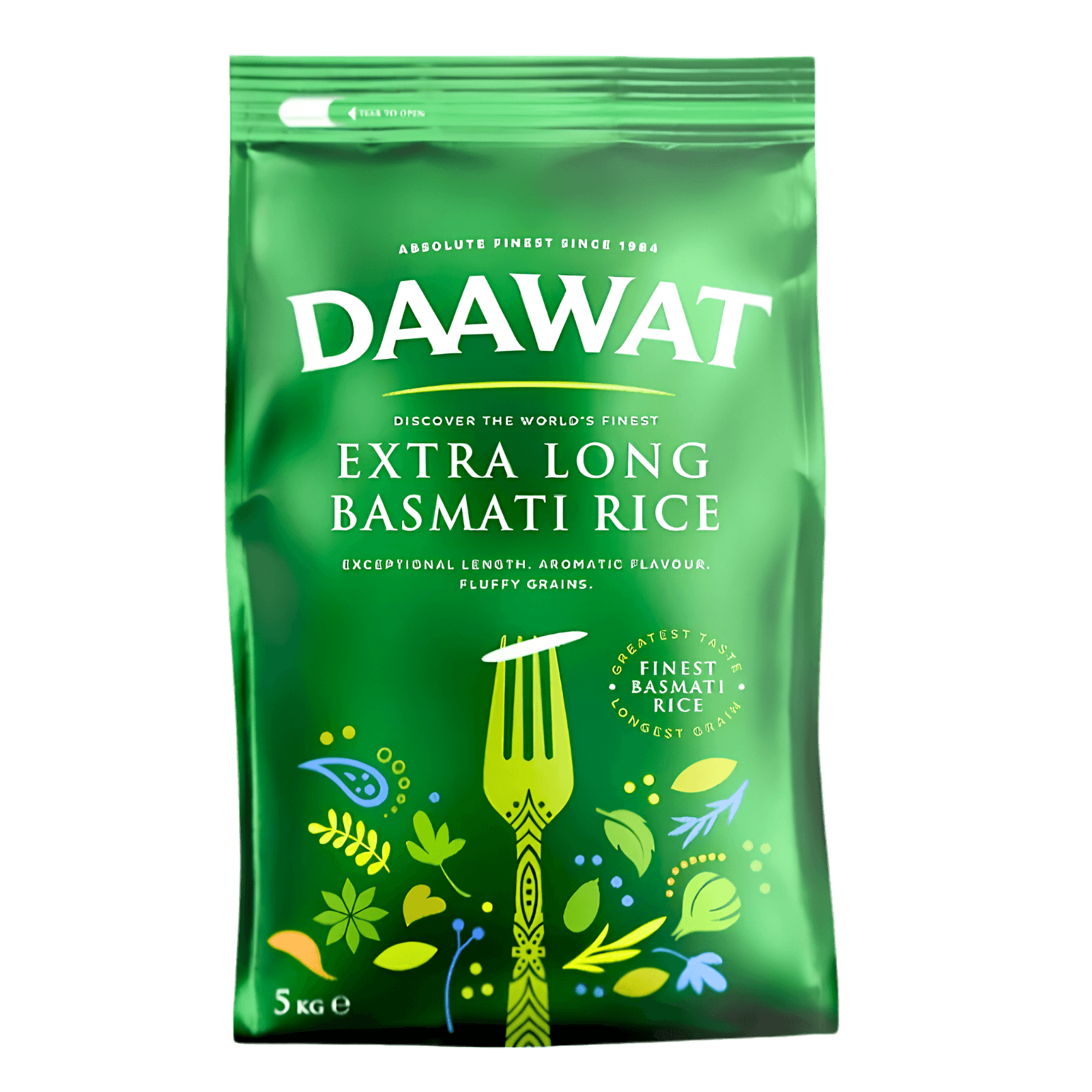 DaawatDaawat Basmati-Reis, extra langes Korn19,99 € · 5 kg · 4,00 € je kg
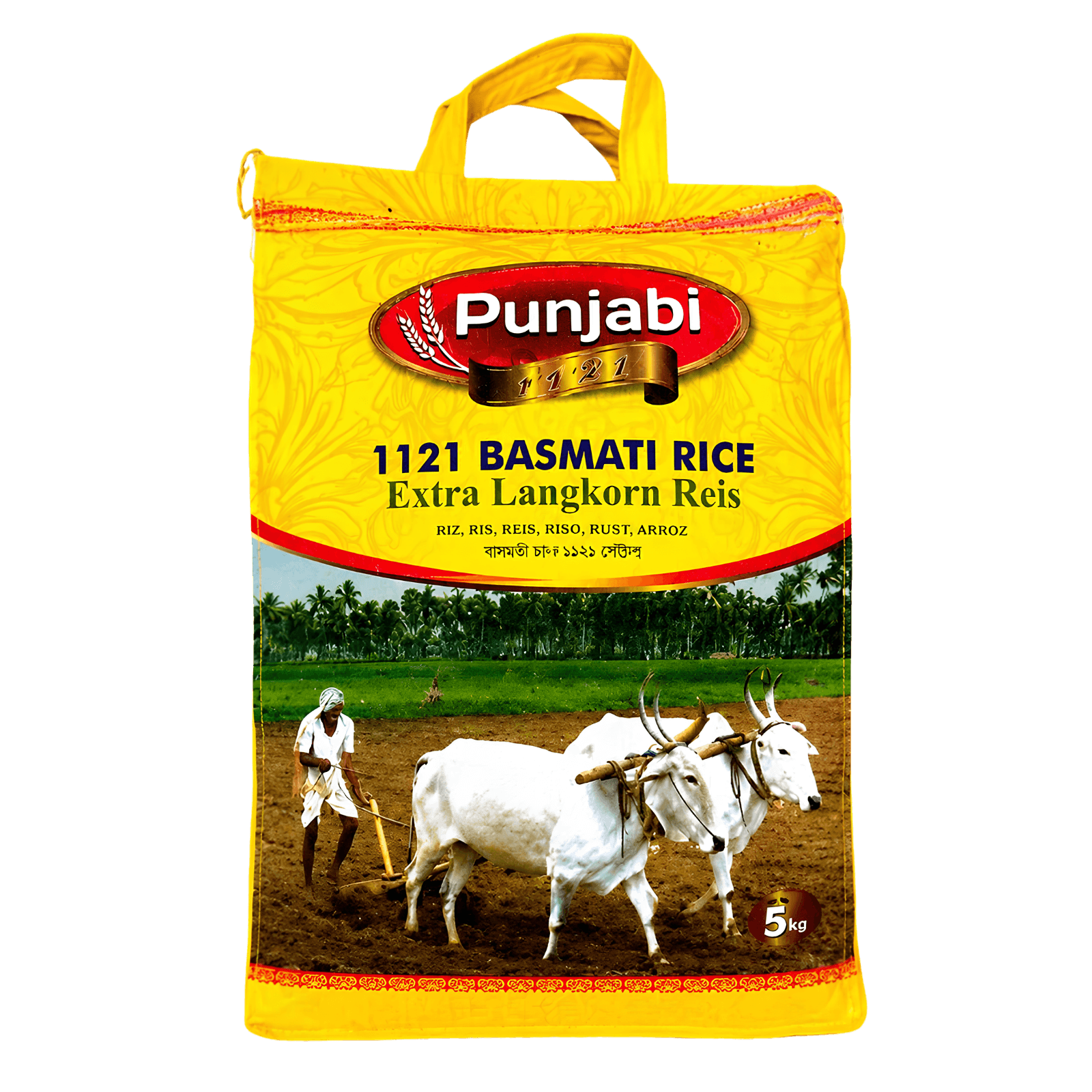 PunjabiPunjabi Basmati-Reis 112117,99 € · 5 kg · 3,60 € je kg
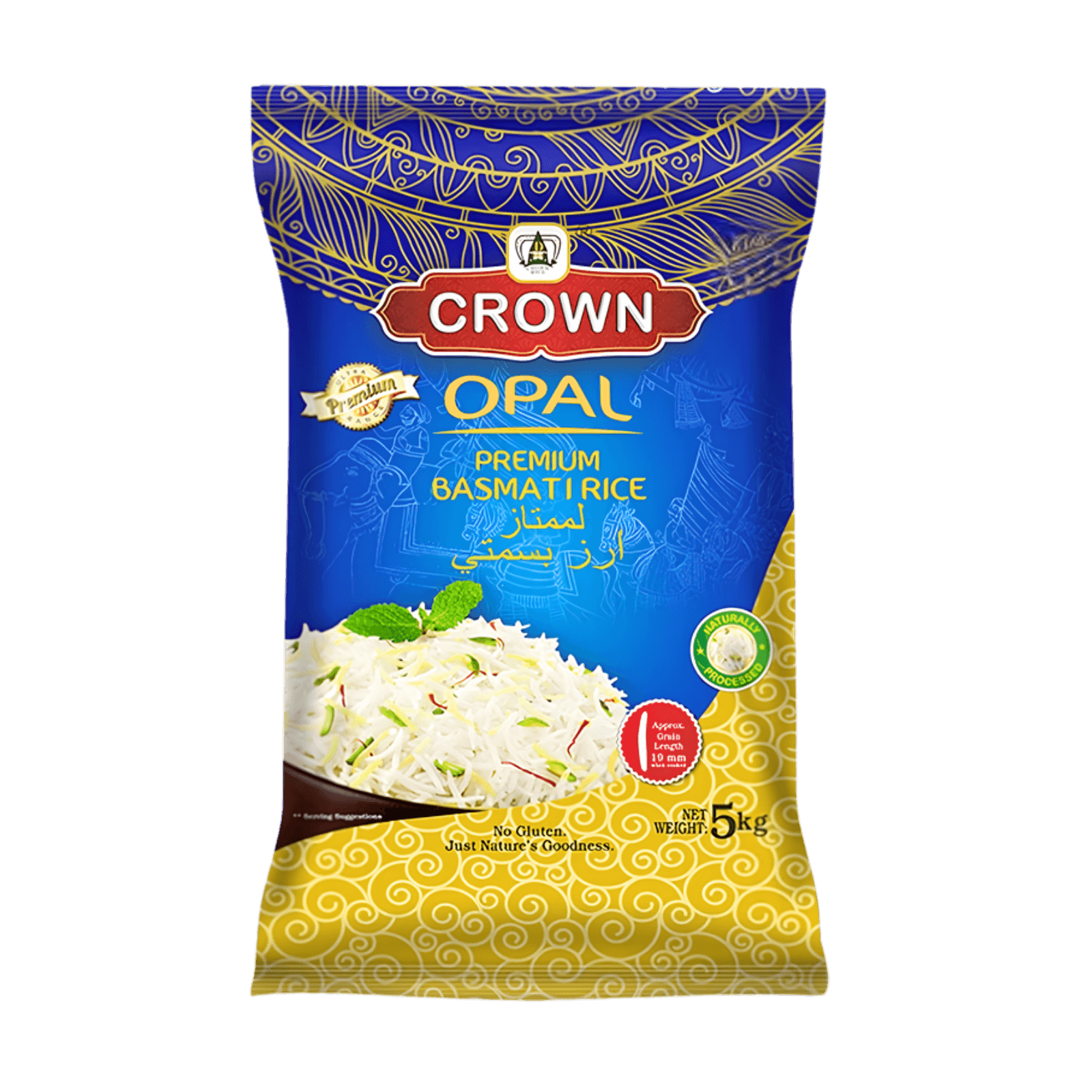 CrownCrown Opal Basmati-Reis24,99 € · 10 kg · 2,50 € je kg
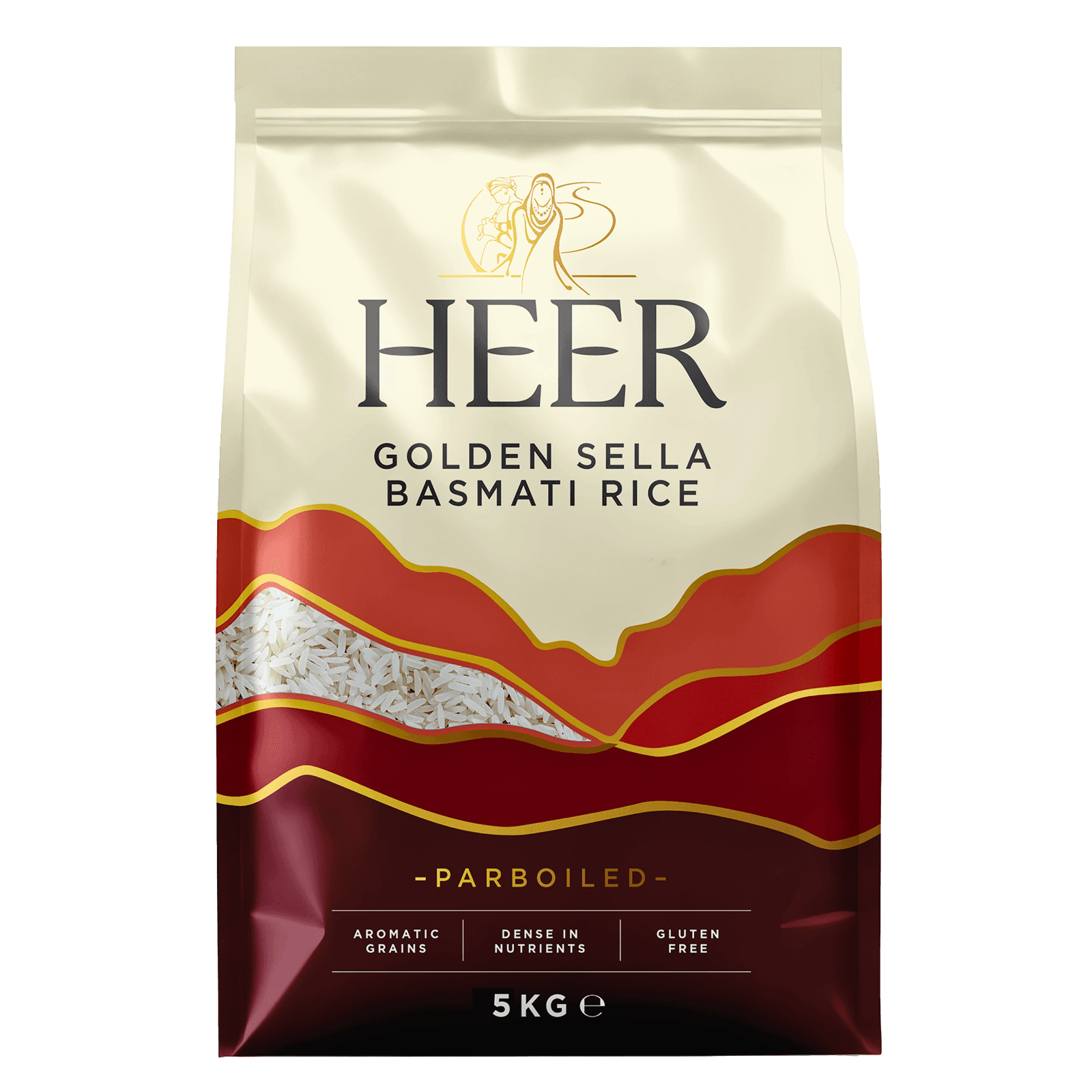 HeerHeer Basmati-Reis, vorgedämpft (Golden Sella)17,99 € · 5 kg · 3,60 € je kg
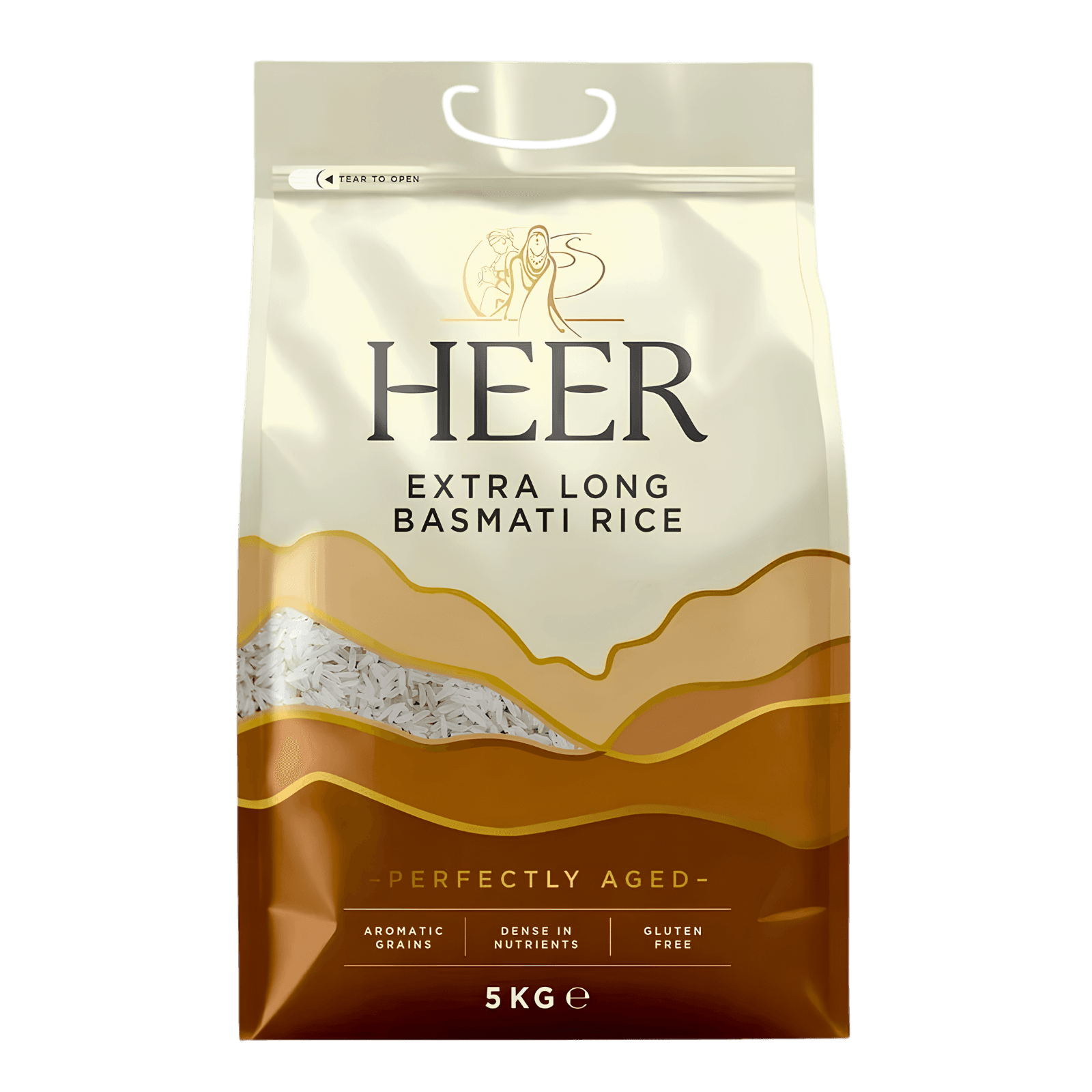 HeerHeer Basmati-Reis, extra langes Korn32,99 € · 10 kg · 3,30 € je kg
 PunjabiPunjabi Basmati-Reis 1121, vorgedämpft (Golden Sella)17,99 € · 5 kg · 3,60 € je kg
Alle Preise inkl. MwSt., zzgl. Versand 4,90 €, ab 49,00 € Bestellwert versandkostenfrei.
Quellen
- Platts, J. T. (1884). bās. In A Dictionary of Urdu, Classical Hindi, and English (S. 122). Digital Dictionaries of South Asia, University of Chicago.
- McGregor, R. S. (o. J.). bās. In The Oxford Hindi-English Dictionary (S. 728). Digital Dictionaries of South Asia, University of Chicago. Abgerufen am 6. Oktober 2026.
- Oxford University Press. (o. J.). basmati. In Oxford Advanced Learner's Dictionary. Abgerufen am 6. Oktober 2026.
- King, N. I. (o. J.). rice. In My Bombay Kitchen. Abgerufen am 6. Oktober 2026.
- The Rice Association & British Retail Consortium. (2022). Code of Practice for Basmati Rice. The Rice Association.
- Alford, J. & Duguid, N. (1998). basmati. In Seductions of Rice.
- Food Safety and Standards Authority of India. (2025). Chapter 2: Food Product Standards, 2.4 Cereals and Cereal Products, 2.4.6 (26) Basmati Rice.
- Bradbury, L. M. T., Fitzgerald, T. L., Henry, R. J., Jin, Q. & Waters, D. L. E. (2005). The gene for fragrance in rice. Plant Biotechnology Journal, 3(3), 363–370. DOI: 10.1111/j.1467-7652.2005.00131.x
- Wei, X., Handoko, D. D., Pather, L., Methven, L. & Elmore, J. S. (2017). Evaluation of 2-acetyl-1-pyrroline in foods, with an emphasis on rice flavour. Food Chemistry, 232, 531–544. DOI: 10.1016/j.foodchem.2017.04.005
- Grimes, L. (2009). basmati. In The Cook's Book of Everything.
- Alford, J. & Duguid, N. (2005). basmati. In Mangoes & Curry Leaves.
- Qureshi, M. (o. J.). sella basmati rice. In The Red Sea Cookbook. Abgerufen am 6. Oktober 2026.
- Indian Culture: Crown Opal Basmati-Reis: Zutatenliste und Herkunft der Packung.
- Indian Culture: Daawat Basmati-Reis, extra langes Korn: Zutatenliste und Herkunft der Packung.
- Indian Culture: Heer Basmati-Reis, extra langes Korn: Zutatenliste und Herkunft der Packung.
- Indian Culture: Shaan E Shaukat Basmati-Reis, extra langes Korn: Zutatenliste und Herkunft der Packung.
- Indian Culture: Punjabi Basmati-Reis 1121: Zutatenliste und Herkunft der Packung.
- Indian Culture: Heer Basmati-Reis, vorgedämpft (Golden Sella): Zutatenliste und Herkunft der Packung.
- Indian Culture: Punjabi Basmati-Reis 1121, vorgedämpft (Golden Sella): Zutatenliste und Herkunft der Packung.
- Cambridge University Press. (o. J.). basmati. In Cambridge Dictionary. Abgerufen am 6. Oktober 2026.
- Alford, J. & Duguid, N. (1998). Thai jasmine rice. In Seductions of Rice.
- National Bureau of Agricultural Commodity and Food Standards, Ministry of Agriculture and Cooperatives. (2003). Thai Agricultural Standard TAS 4000-2003: Thai Hom Mali Rice.
Eintrag zitieren
„Basmati“. In: Indian Culture Glossar. <https://www.indian-culture.de/glossar/basmati>.