
Cardamom
Cardamom, elaichi in Hindi, is the pod of a ginger-family plant.1,2,3,4 Green from South India smells sweet, black from the Himalaya tastes smoky.1,3,5,6,7,8
Also known as Kardamom, Cardamom pods, Elaichi
Green cardamom, elaichi in Hindi, is the dried pod of Elettaria cardamomum, a plant of the ginger family from the forests of South India.1,2,3,4,5,9,10,11 Each pod holds small dark seeds with a sweet, warm and highly aromatic flavour.1,3,5,10 Black cardamom is a different plant, Amomum subulatum from the eastern Himalaya; dried over fire, it tastes smoky and of camphor.1,6,7,8,10 Green cardamom flavours chai, sweets and garam masala, black cardamom hearty dishes such as curries and rice dishes.1,3,6,7,10 The pods usually go into the dish whole or lightly crushed, or the seeds are freshly ground.1,3,7,10 The TRS Black Cardamom pack lists only black cardamom, moti elaichi.12
What is elaichi called in English?
Cardamom. Elaichi, written ilāychī in Hindi, goes back to Sanskrit elā, which itself comes from a Dravidian language of South India.3,4,11
What is cardamom good for?
In the kitchen: green cardamom flavours chai, sweets and garam masala, black cardamom suits curries and rice dishes. In Scandinavia it goes into pastries and is also used to flavour coffee.1,3,6,7,10
Related products in our shop
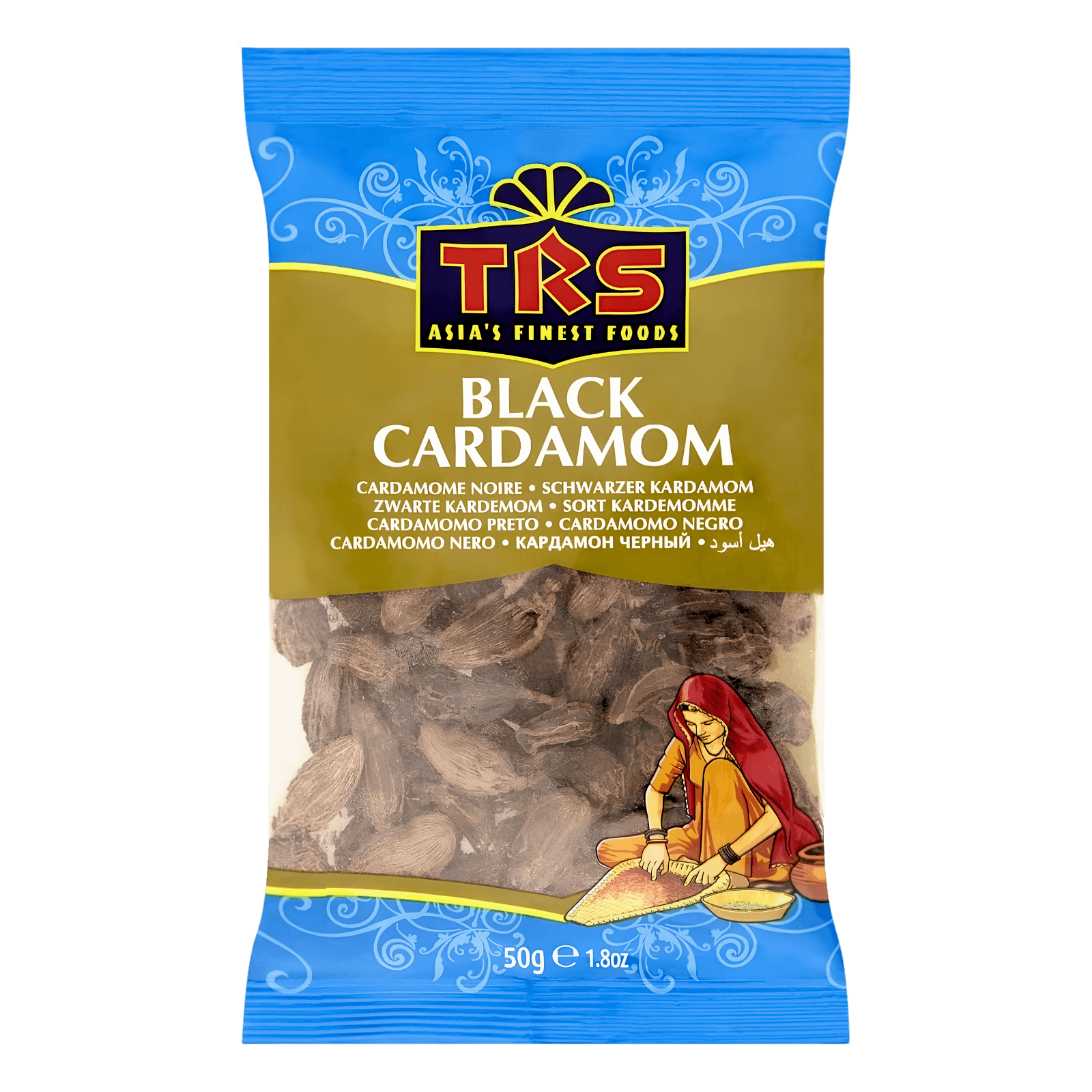 TRSTRS Black Cardamom (Moti Elaichi)€3.99 · 50 g · €79.80 per kg
 AnnamAnnam Mustard Seeds (Rai)€6.49 · 400 g · €16.23 per kg
 TRSTRS Whole Coriander Seeds (Dhania)€2.49 · 100 g · €24.90 per kg
 AnnamAnnam Dried Curry Leaves (Kadi Patta)€2.99 · 20 g · €149.50 per kg
 AnnamAnnam Fennel Seeds (Saunf)€8.99 · 1 kg · €8.99 per kg
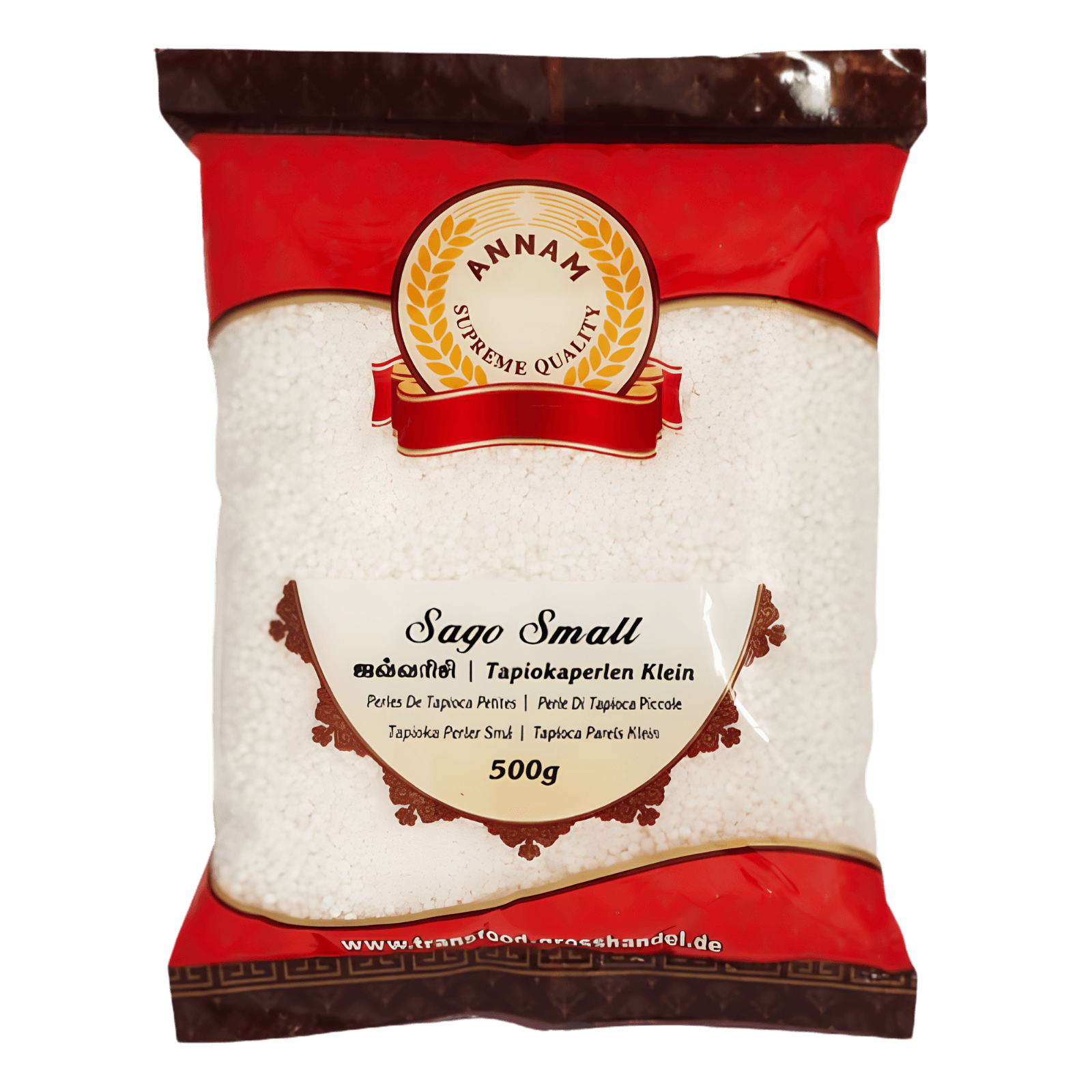 AnnamAnnam Small Sago Pearls (Sabudana)€3.49 · 250 g · €13.96 per kg
All prices incl. VAT, plus €4.90 shipping, free for orders from €49.00.
Sources
- McNamee, G. L. & Britannica Editors. (2026). cardamom. In Encyclopaedia Britannica.
- Davidson, A. (2014). cardamom. In The Oxford Companion to Food. Oxford University Press.
- Katzer, G. (n.d.). Cardamom (Elettaria cardamomum, Kardamom). Gernot Katzers Gewürzseiten. Retrieved October 6, 2026.
- Digital Dictionaries of South Asia, University of Chicago. (n.d.). ilāycī. In The Oxford Hindi-English Dictionary (p. 107, 835). Retrieved October 6, 2026.
- ICAR-Indian Institute of Spices Research. (n.d.). Small Cardamom – Elettaria cardamomum. ICAR-Indian Institute of Spices Research. Retrieved October 6, 2026.
- ICAR-Indian Institute of Spices Research. (n.d.). Large Cardamom – Amomum subulatum Roxb. ICAR-Indian Institute of Spices Research. Retrieved October 6, 2026.
- Katzer, G. (n.d.). Schwarzer Cardamom (Amomum subulatum). Gernot Katzers Gewürzseiten. Retrieved October 6, 2026.
- Singh, A. I. & Pothula, A. K. (2013). Postharvest Processing of Large Cardamom in the Eastern Himalaya. Mountain Research and Development, 33(4), 453–462. DOI: 10.1659/MRD-JOURNAL-D-12-00069.1
- Pai Raikar, S. (2026). Indian cuisine. In Encyclopaedia Britannica.
- Alford, J. & Duguid, N. (2005). Cardamom. In Mangoes & Curry Leaves: Culinary Travels Through the Great Subcontinent. Artisan Books.
- Platts, J. T. (1884). ilāćī. In A Dictionary of Urdu, Classical Hindi, and English (p. 73). Digital Dictionaries of South Asia, University of Chicago.
- Indian Culture: TRS Black Cardamom (Moti Elaichi): ingredients on the pack.
Cite this entry
MLA
“Cardamom.” Indian Culture Glossary, Indian Culture, https://www.indian-culture.de/en/glossar/cardamom.
Chicago
Indian Culture Glossary, s.v. “Cardamom,” https://www.indian-culture.de/en/glossar/cardamom.
APA
Indian Culture. (n.d.). Cardamom. In Indian Culture glossary. https://www.indian-culture.de/en/glossar/cardamom